You should know how the work gets made before you pay for it.
Buying this kind of work is hard because you cannot judge it until it is finished, and by then the money is gone. Most studios answer that by showing you a portfolio and asking you to trust them.
This is the other answer. Below is one job walking through the building, in the order it really happens, from the first rough plan to the day the keys change hands. Five minutes to read, and it will tell you more than a sales call.
- ROOM 01The story room
The whole thing gets planned before any of it gets built.
Your job starts as a plan you can look at and point to rather than as a conversation you have to remember. Nothing expensive begins until you have seen it.
You also get the seven stages written down in order at that kickoff, each with a name, so you can always say which one the job is in. Each is finished when you say it is finished, not when the studio says so.
Changing a drawing takes ten minutes. Changing a built thing takes a week. So the disagreements happen here, where they are cheap.
- The information architectureWhat you actually have, what belongs with what, and what somebody arriving is trying to get done. Now and then a business already knows, and this stage is over in an afternoon. More often it has to be dug out first, and that digging is the work: it decides every page that follows, so it is the one stage worth taking as long as it takes.
- The sitemapEvery page or screen, in order, with what each one is for, so the shape of the whole job is something you can point at.
- The lookType and colour arrive as two or three real directions, never as a question about what you like.
- The layoutsEach screen drawn and agreed before anybody builds it. This is the cheap place to change your mind.
- The buildA private link you can open on your own phone, always current, from the first week to the last.
- The launchIt goes live with nothing left owing: the documentation written, the walkthrough recorded.
- The handoverAccounts created in your name on a call, with everything moved across while you watch.
The rigOne place for the sitemap and the first rough wireframes, one for the layouts and the look, and a plain written outline for the words. You see all three while they are still rough, and you can mark them up where they sit, without learning anything or installing anything.Argue with the plan, not the build.ROOM 01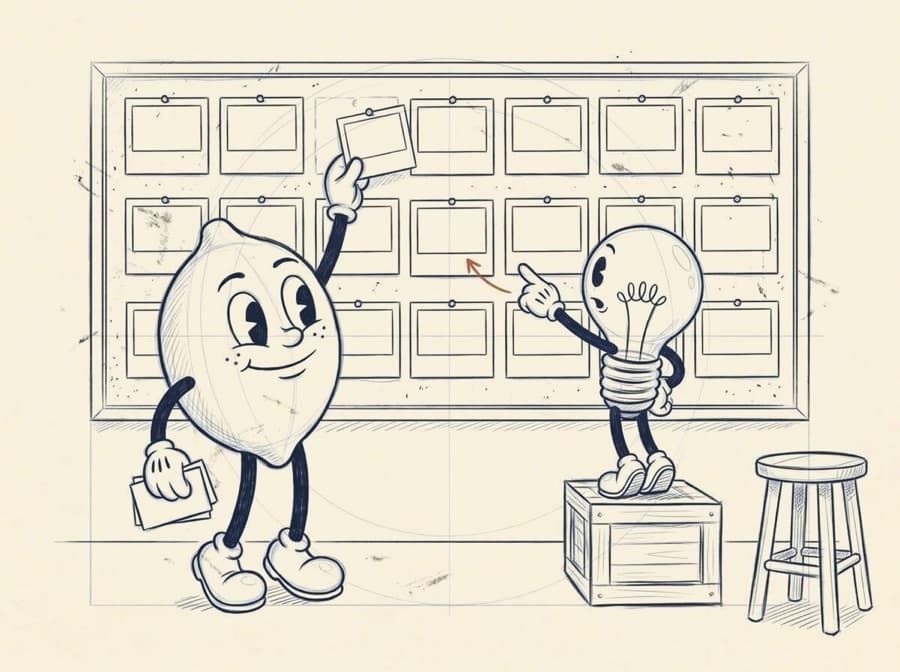
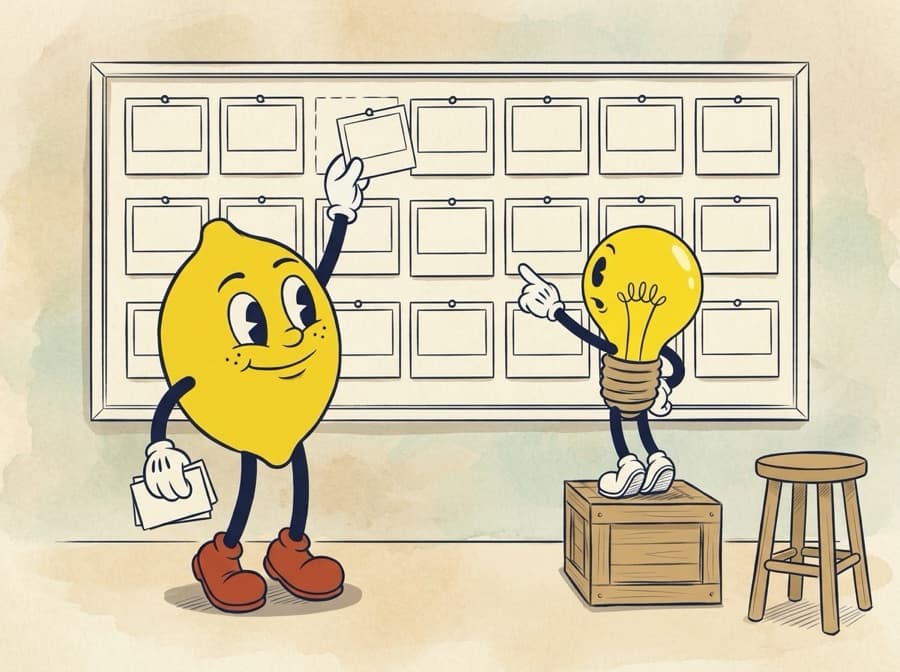
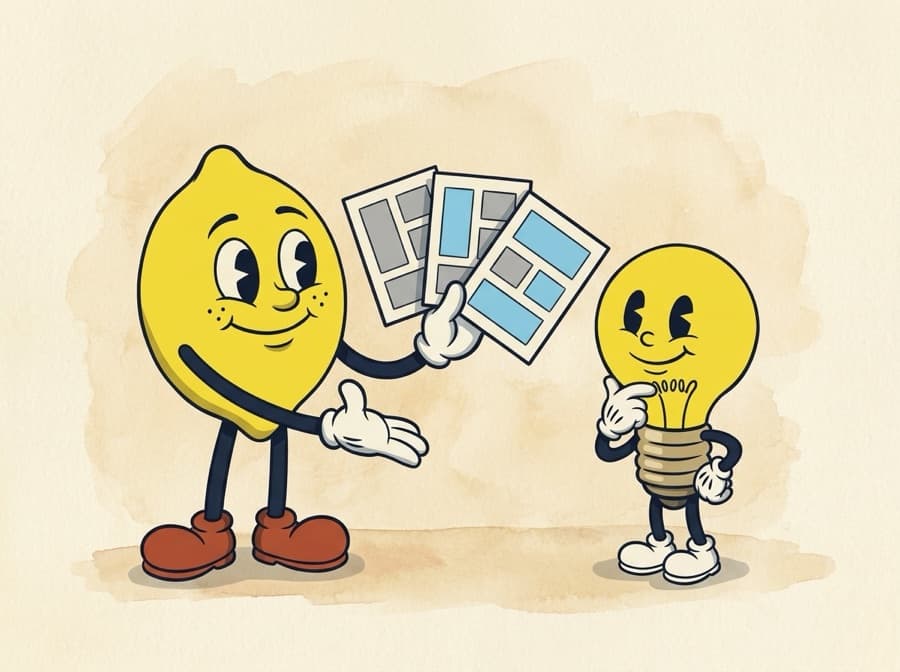
The whole job, up on the wall as cards, while any of them can still be moved. - ROOM 02The layout department
You get choices to react to, never a blank page.
Nobody thinks clearly when asked an open question about a thing that does not exist yet. So nobody asks you to describe what you want. Two or three real directions arrive instead, and you say which one is wrong and why.
That holds all the way through. Type and colour arrive as a small set of options. Structural questions arrive as a decision with a recommendation attached and the trade-offs of each written out, including the trade-offs of the recommended option.
A menu, not a blank page.ROOM 02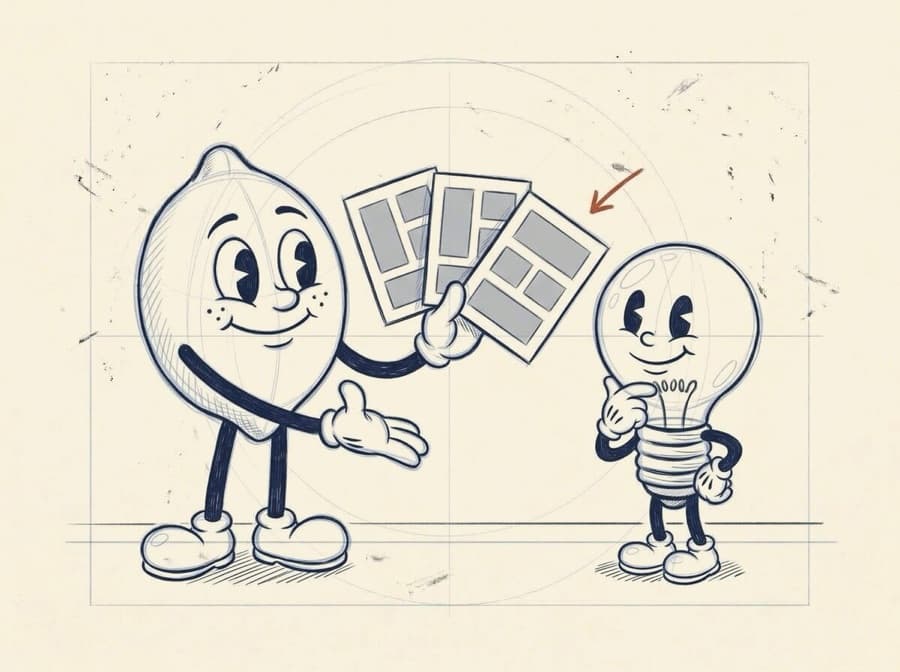
Three you can hold up against each other beats one you have to imagine. - ROOM 03The pencil test
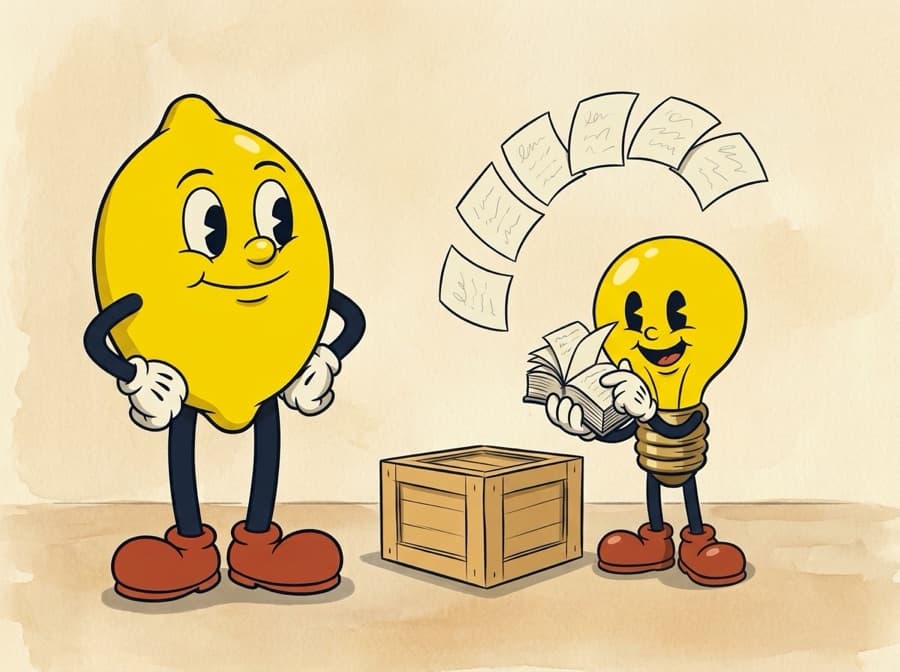
You see it working on your own phone in the first week.
A pencil test is the roughest usable version of a thing, put in front of people early to find out whether it works at all. Yours is a private link you can open on your own phone, and it is always current. Click it any time and you see where the work actually stands.
It will look unfinished, because it is. Better to say plainly that a screen is a placeholder or that a number on it is invented than let you react to something you think is real. You cannot give useful notes if you are not sure what you are looking at.
Almost every troubled project that arrives here for rescue went wrong the same way: nobody saw anything real until the end.
Rough, on your phone, and honestly labelled.ROOM 03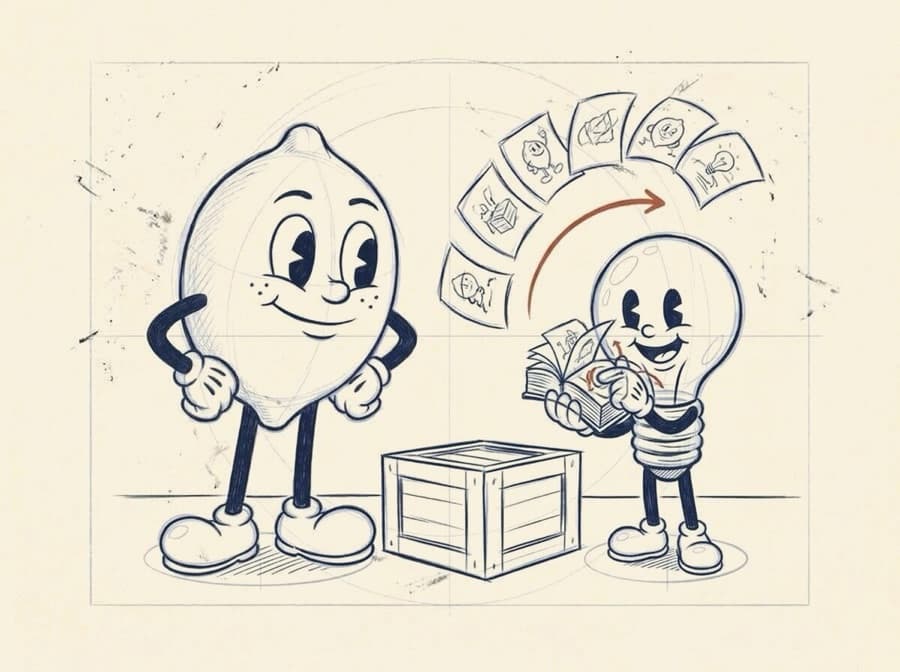
You are meant to see it half-built. That is the point of showing it this early. - ROOM 04The sweatbox
A short review every week, and the whole schedule up front.
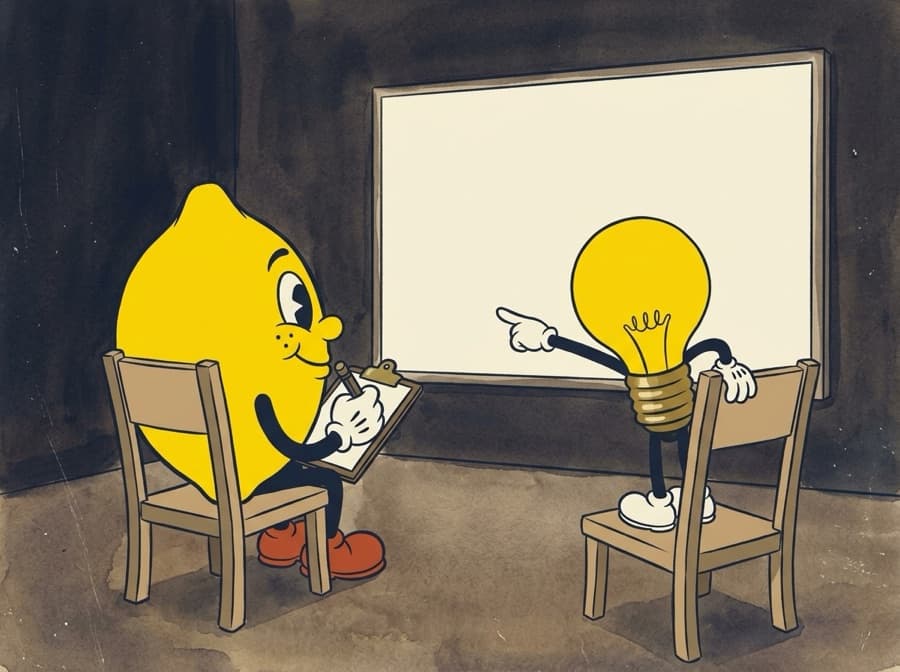
The sweatbox was the small dark room where the week’s work got shown and picked apart before it went any further. Yours is thirty minutes, twice a week on a build, where you say what is wrong and nobody defends it.
Every service page carries the whole schedule up front: what you see each week and what is needed from you. On two of the three, a written memo arrives inside the first fortnight with the options, the costs, what could go wrong, and which one the studio would pick. That memo is yours to keep whether you carry on or not.
The schedule goes up before the work starts.ROOM 04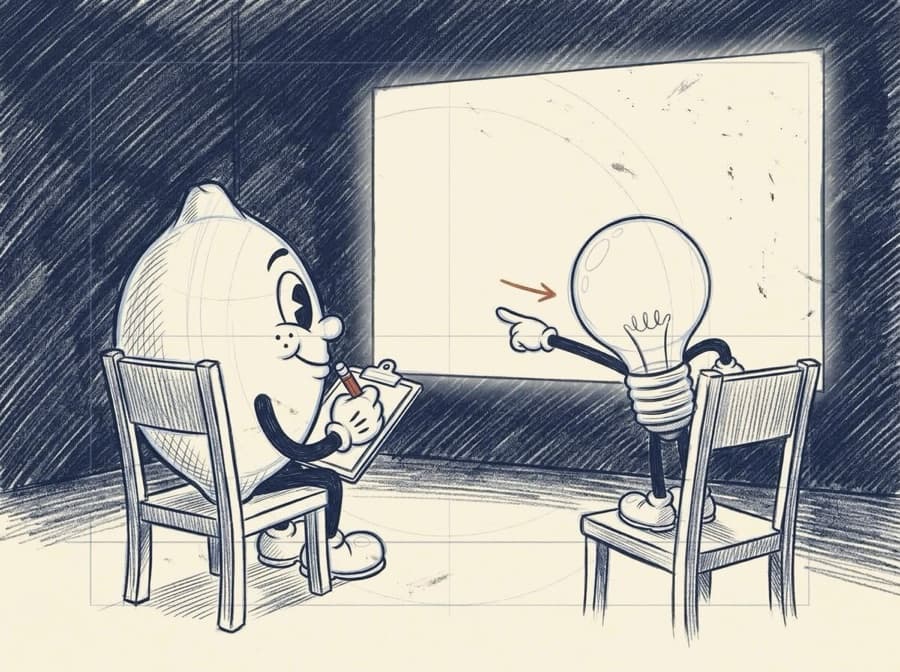
The one room where the work gets argued with before anybody else has to live with it. - ROOM 05Ink and paint
Finished means finished, not demonstrated.
Anything can be made to look good for twenty minutes in a demo. What decides whether it survives contact with your team is the unglamorous half: error handling, guardrails, access you control, written documentation, and a recorded walkthrough.
All five are in every build, and none of them are an upgrade. They are the whole difference between something that impresses you in month one and something that still works in month twelve.
The parts a demo skips.ROOM 05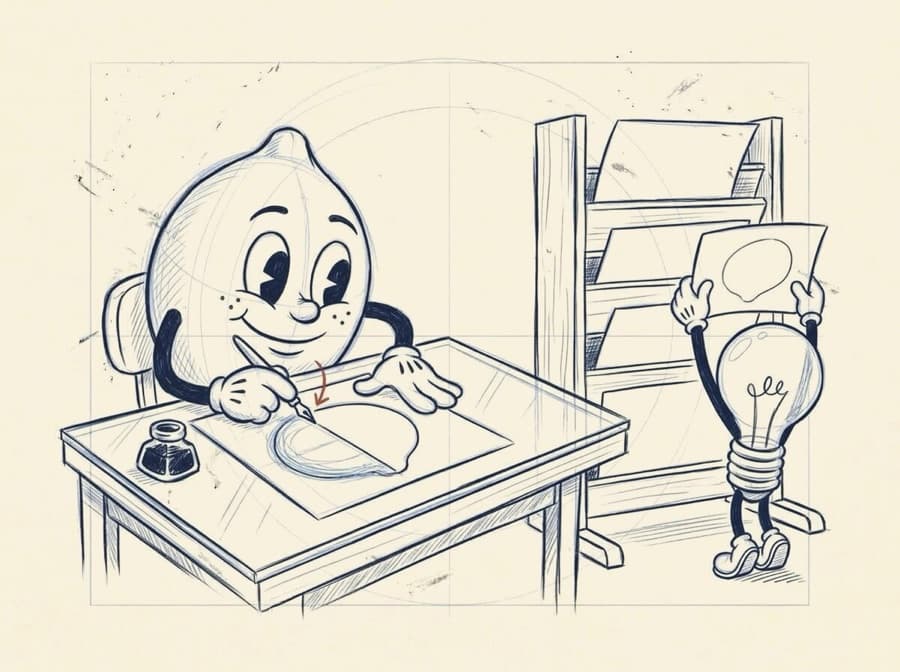
The unglamorous half, and the half you are still relying on a year later. - ROOM 06The handover
Everything ends up in accounts with your name on them.
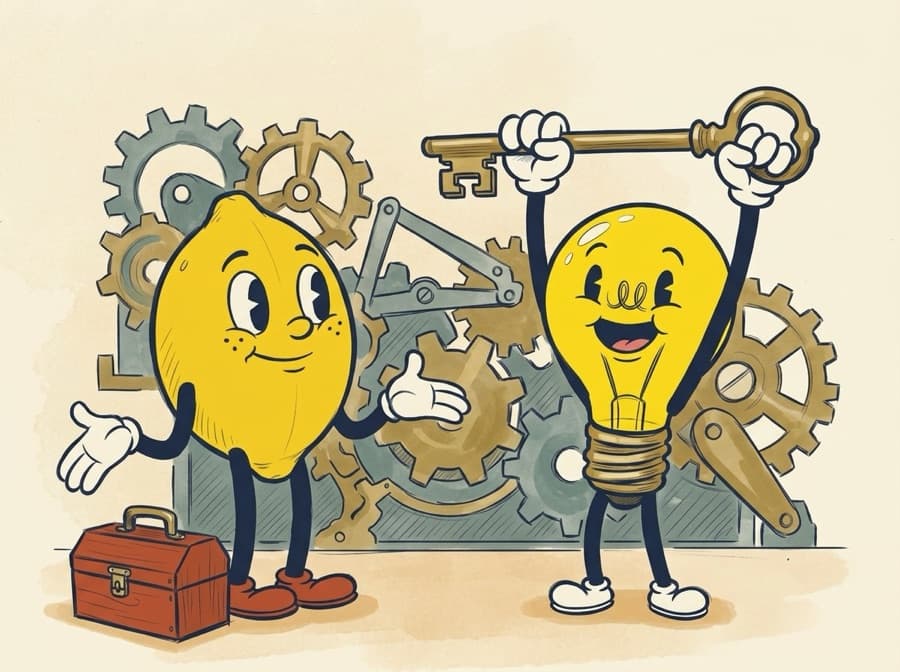
The work is built in the studio’s own accounts so that setting up yours is never in the way of a deadline. Then, on a call together, you create the accounts and it all moves across while you watch. You will know where your own things live, because you made them.
The code, the hosting, the analytics, the domain. Yours, with me added as a helper rather than an owner. There is a plain reason for doing it this way: if I am on vacation, you are not stuck.
You hold the keys, not me.ROOM 06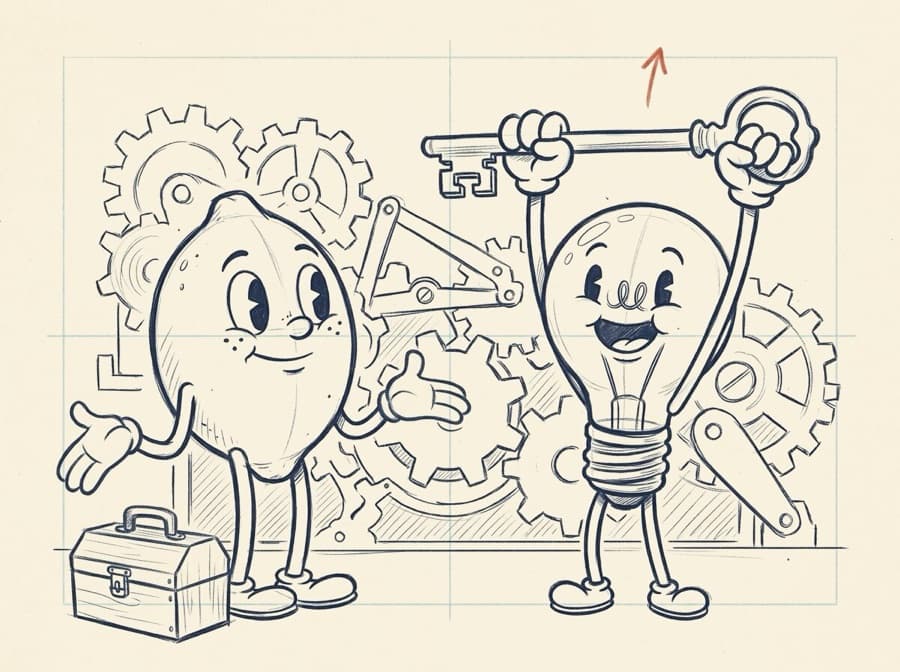
The job is finished when you can run it without the studio, not when it goes live. - ROOM 07Off the clock
The work does not stop at the edge of what you paid for.
In practice a good deal of the useful work happens sideways. You mention a problem next to the one the job was for, and if it can be sorted out in the next ten minutes, it gets sorted out on the call. A domain chased down. A shortcut shown. A bug reported to somebody else’s support team on your behalf.
None of that reaches an invoice. The studio is already here, the attention is already yours, and stopping to write it up as scope would take longer than simply doing it.
Already here, already looking.ROOM 07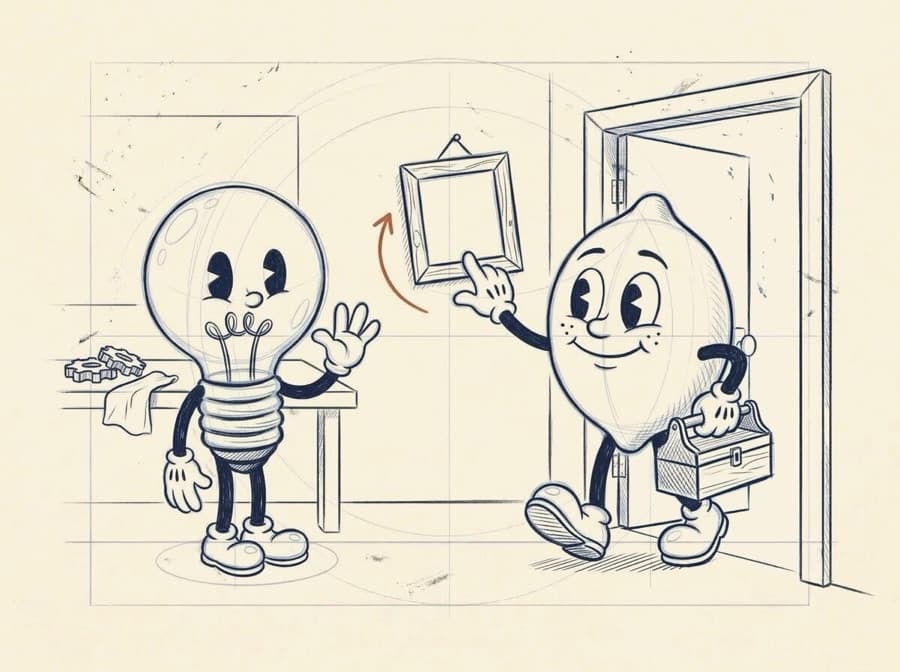
The last ten minutes of a job are usually the cheapest ten minutes to be useful in.

The advice everybody gives, and what I actually think.
You will have heard most of this already, probably more than once. Some of it is right. Here is where I disagree, so you can find out now rather than three weeks in.
You need an AI strategy.
- You need one workflow that works. The strategy is the document you write afterwards, describing what you already learned from it. Anyone selling you the document first is selling you the easy half.
Get something up fast and iterate.
- Fast stopped being the hard part about two years ago. Anyone can have something up by this afternoon. Knowing which thing is worth putting up is now the entire job.
Build the full version. You will need it eventually.
- I have watched teams build the whole suite for a problem nobody had checked, and then watch nobody use it. Build the smallest thing that answers the question, and stop at the point where more of it stops paying.
You should really have a bigger team on this.
- A bigger team is mostly how a small job turns into a large one. A good deal of what agencies charge for is the cost of keeping six people informed about work that two of them are doing.
Just use a template.
- Often you should, and I will tell you so on the call. If what you sell is roughly what the business next door sells, a template is a genuinely good answer and I am an expensive one.
Can you do it cheaper?
- No, but I can do less of it, and that is a real offer rather than a polite refusal. Tell me the number you have and I will tell you honestly what fits inside it.
Software built here for its own use, which you are welcome to inspect.
Each of these started as a problem with nothing on the market to solve it. They are free, they are open source, and they run every day on the machines here.
They are also the only part of the work here where you can read every line of the code before deciding whether to hire the studio. Most people will not want to. It matters that you could.
Tokentrail
Ties AI coding spend to the branch and the pull request it paid for. It exists because the invoice arrived as a single number with no way to tell which feature had eaten it. Version 0.17, twenty-seven commands, sixty-seven test files.
Archi
Makes years of Kindle highlights searchable by meaning rather than by wording, with the model running on your own machine and nothing sent anywhere. First commit in May, version 0.3 by August, forty-two test files.
lmn.bar
The console behind every growth engagement here. Store, ad, and inventory data joined into one model, with an agent that shows its working and waits for a yes before it spends anything. It was built out of need here, and then clients wanted it.
One person, and my name is on it.
You can buy generated work this year in any volume, at any price, from almost anybody. What has become genuinely hard to find is a person who has read every line of it and will answer for it in a room.
I use modern tools, including AI. I am not going to pretend otherwise, and I am not going to bill you for the pretending. What you are paying for is not the typing. It is that everything which reaches you is something I have read, understood, and will still be able to explain a year from now when you come back with a question.
From the first call to the handover it is the same person. No account manager to get past, no team you have never met doing the actual work, and nobody to hand you along to when something goes wrong.
The honest reason I do this at all: the part of the job I like best is making the thing that lets somebody else do their best work. Everything above is just what that requires.
Why they are on the website at all.
Most firms this size keep their numbers back, and it works perfectly well: you have to get on a call before anybody will tell you anything, and by then you are invested. Publishing means a stranger can decide the price is too high in ten seconds, and the studio will never know it happened. Better that you knew. If the figures do not work for you, you have lost a minute instead of a fortnight.
That is the tour.
If this looked like somewhere your problem would be handled properly, fifteen minutes on a call is enough to find out for certain. Bring it exactly as it is, with nothing prepared. If I am not the right person for the job, I will say so on that call and point you towards somebody who is.