Mental Hygiene

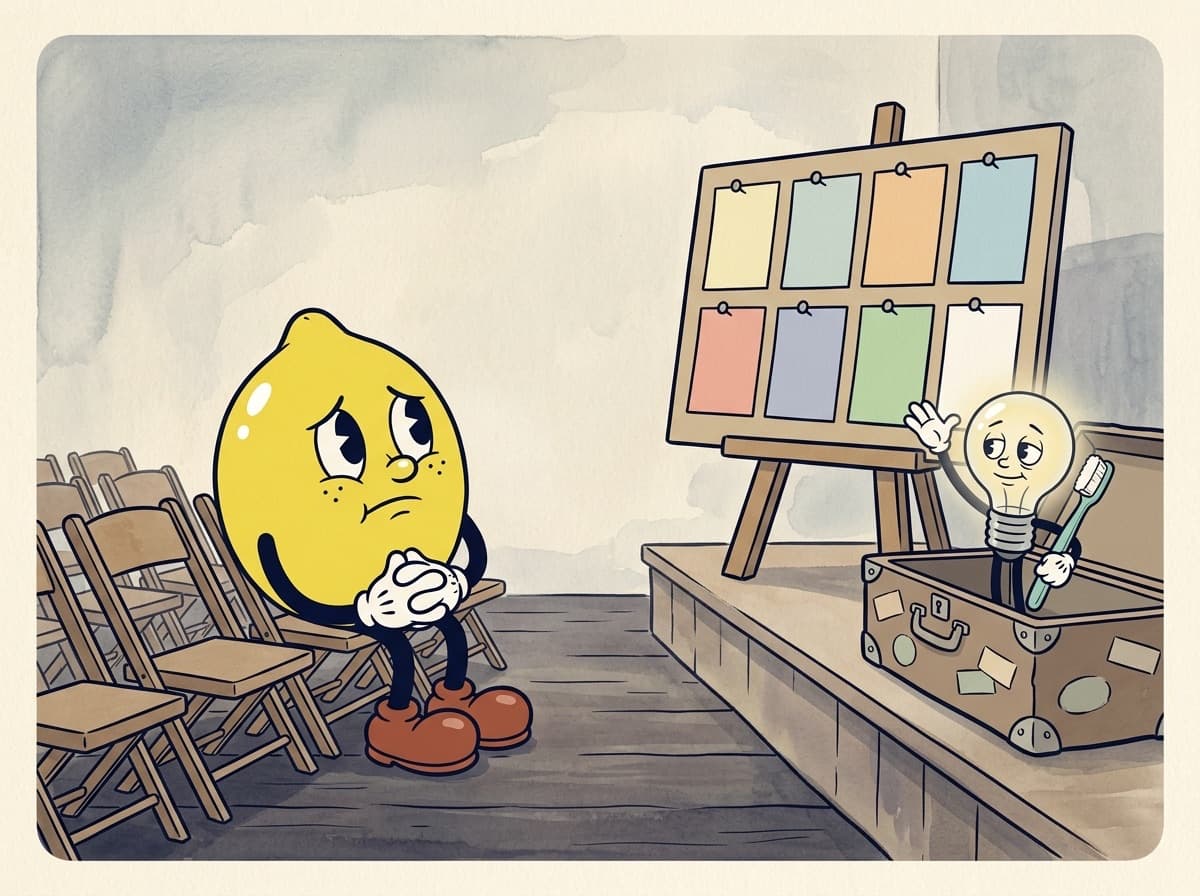
A system taught from town to town, and nowhere to come back to.
The founder has worked with high school and college students for more than twenty years, and now teaches the system in talks to workplaces, universities, and youth groups. It is eight domains of everyday habits, grounded in a published review from the UC Irvine College of Medicine, and hung on one plain idea: you look after your mind the way you brush your teeth. A talk reaches the people in the room, once. They wanted somewhere the room could go afterwards. Scan a code on the last slide, land somewhere calm, and come back as often as you like.
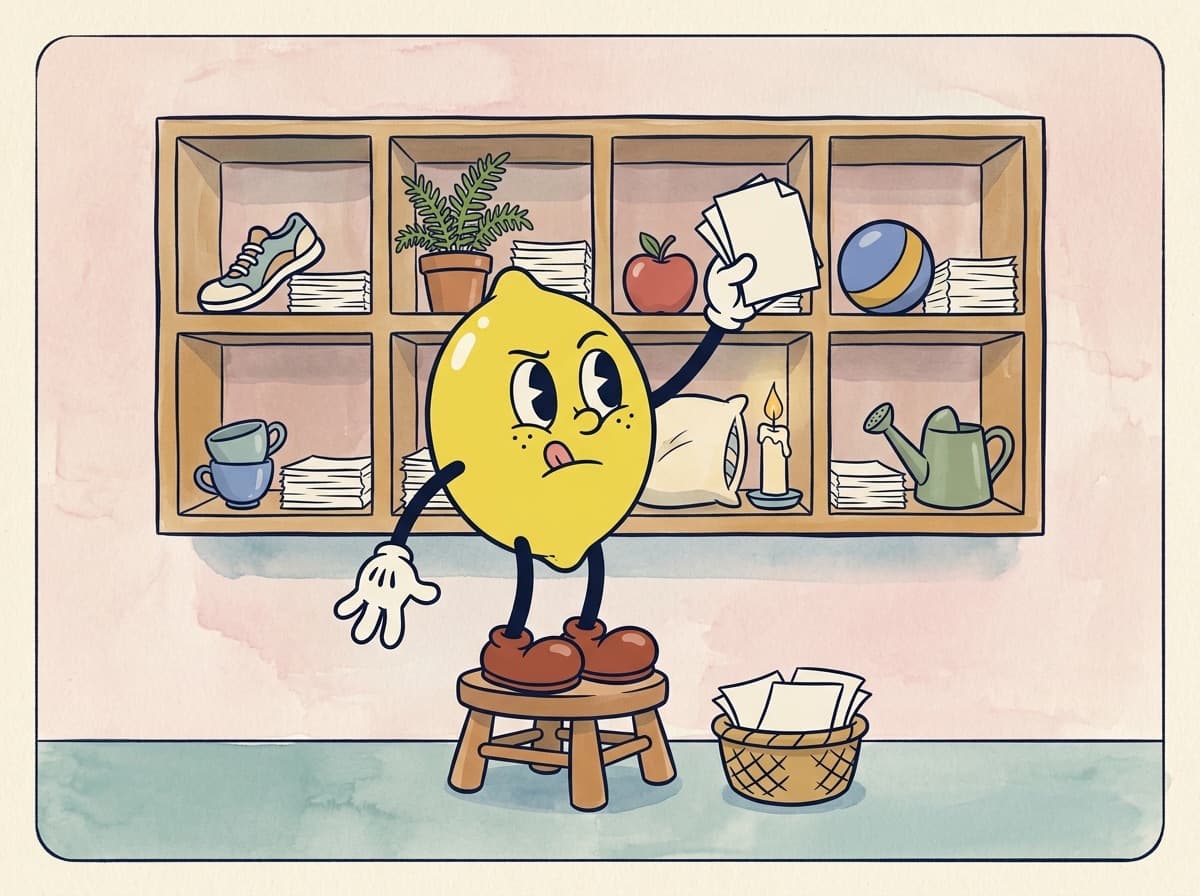
Their eight domains, each with a page of its own.
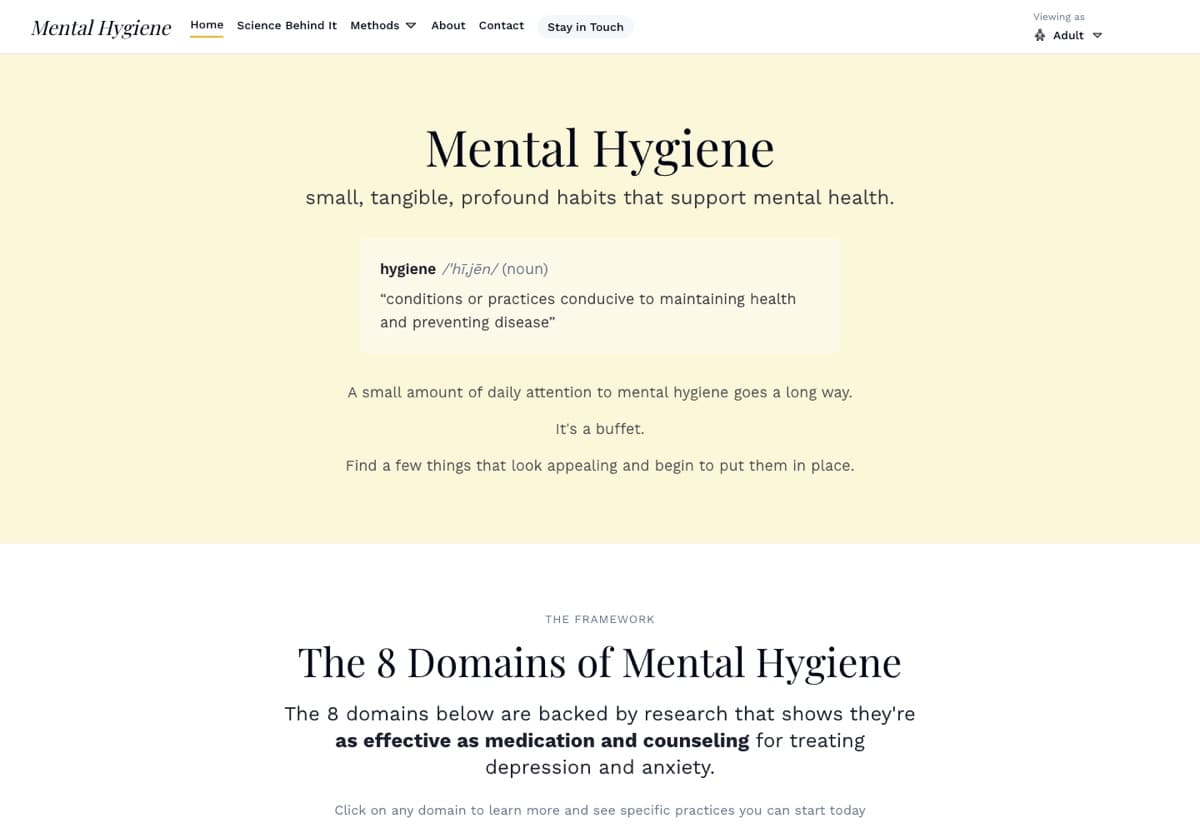
The eight domains, the practices, and the words for each audience were theirs from the start. My job was the website that puts the system to work, and I owned its design end to end. The brief was “Brooks Brothers meets Dr. Seuss”: calm at the front door, playful once you start doing things. So the site is quiet and led by text, with no stock photos, and colour arrives a little at a time as you go deeper. The eight domains sit near the top of the home page for anyone who knows what they want, with a guided start for everyone else. Every research claim carries a citation you can open.
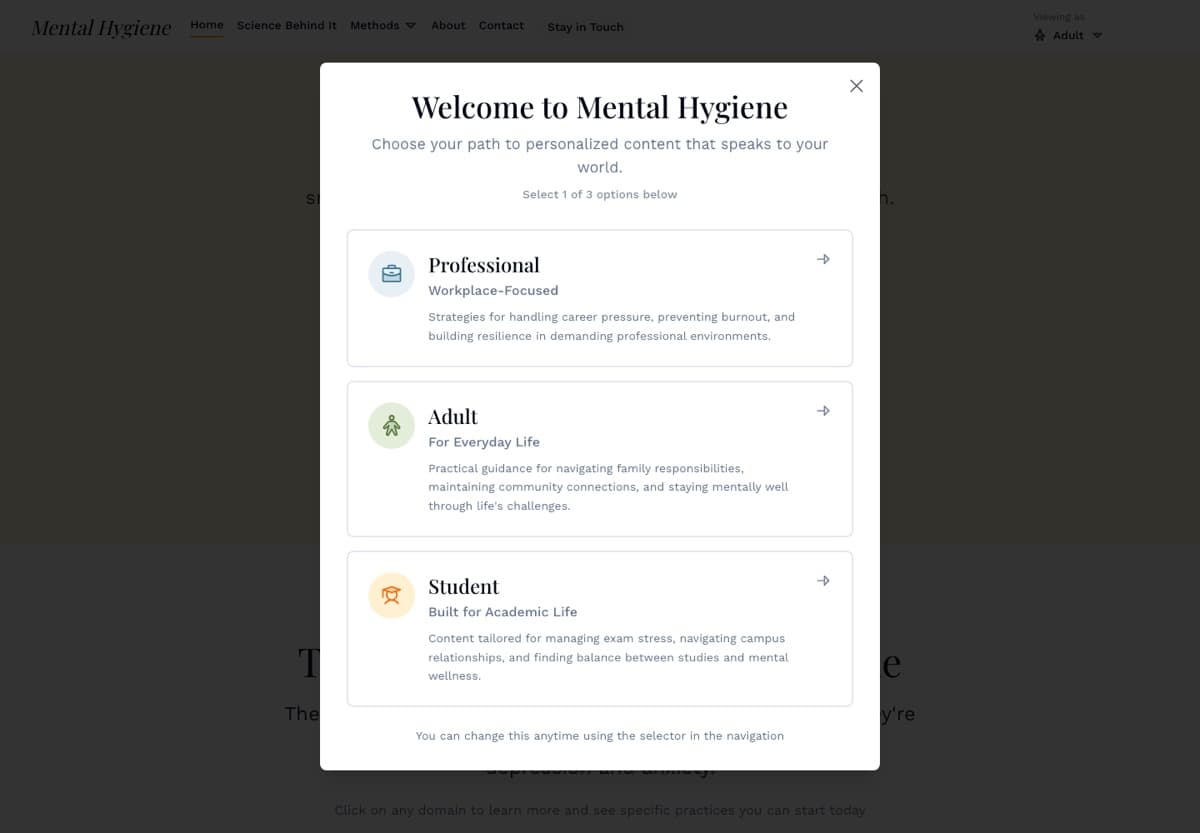
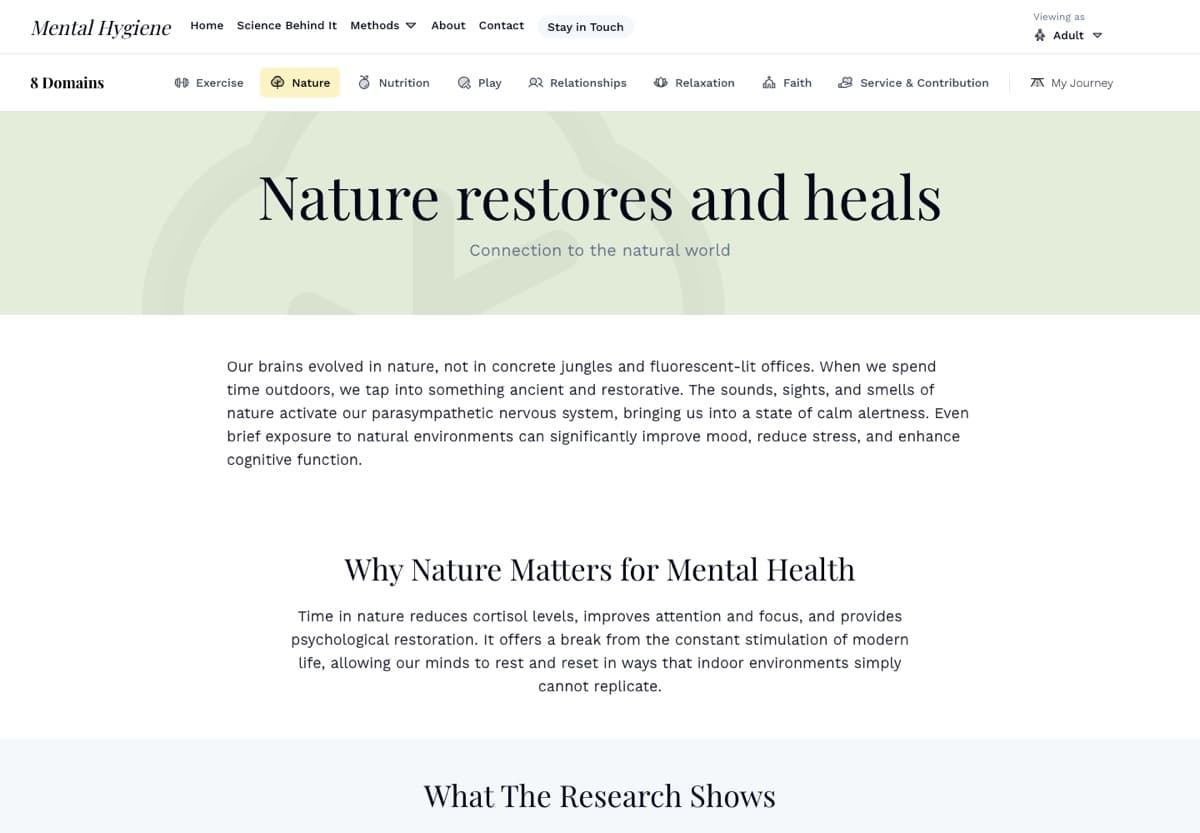
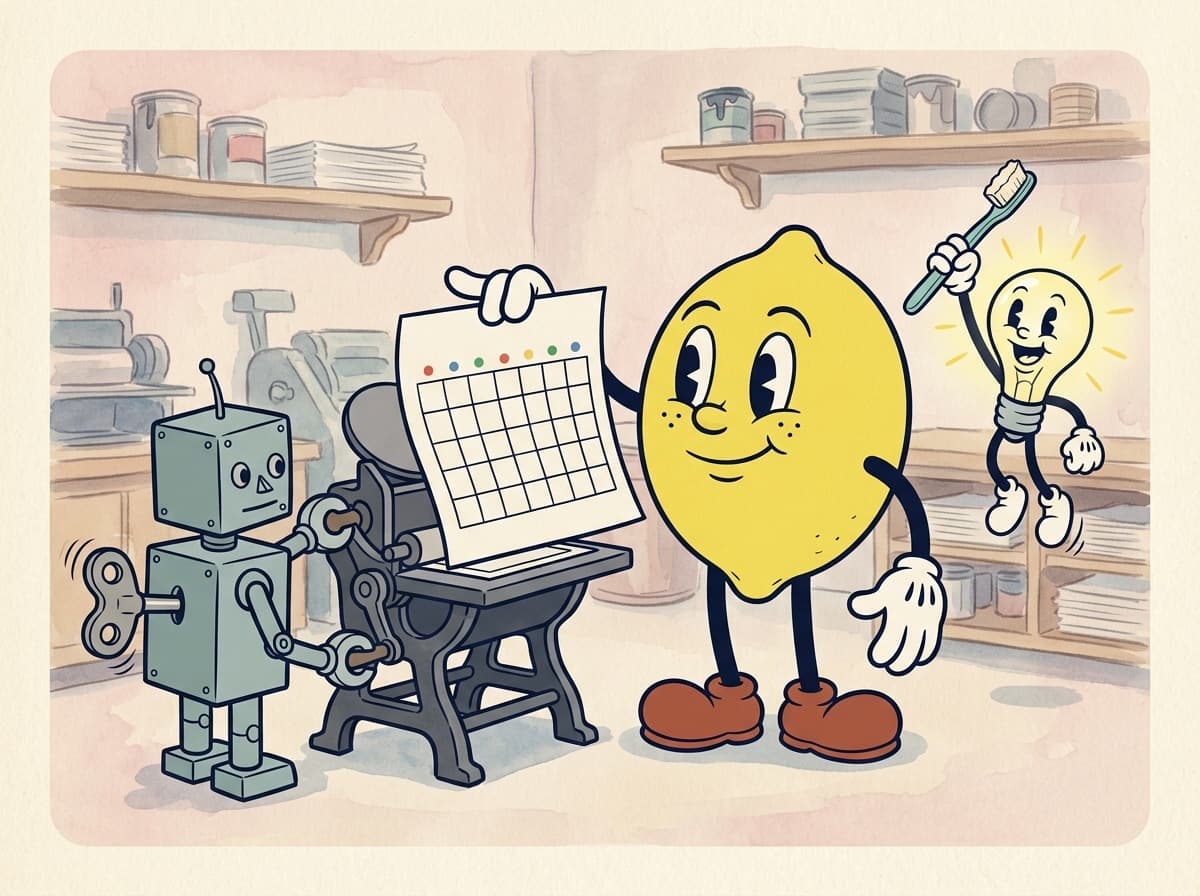
One system, three readers, and a plan for the fridge.
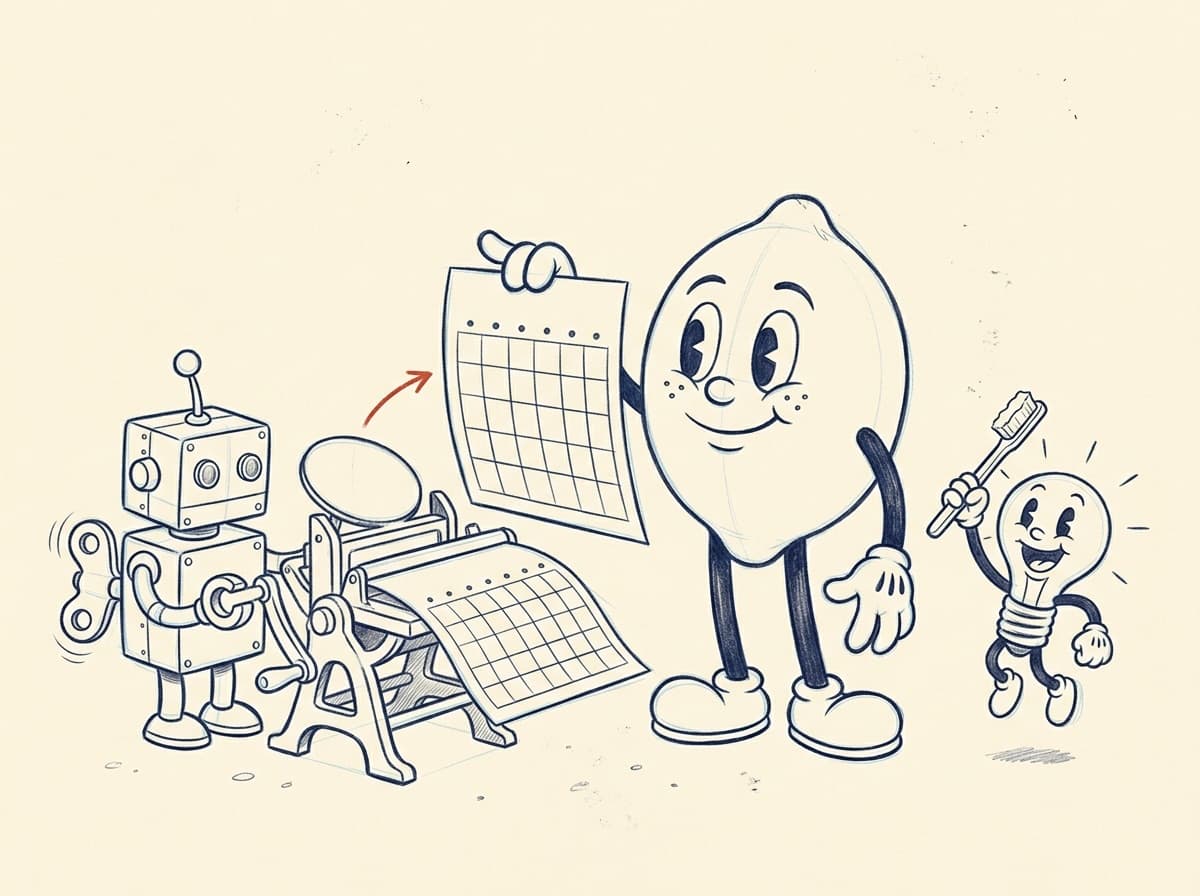
The same talk lands differently for a student, an adult, and a professional, and the founder had written for all three. On a first visit the site asks who you are, and a “Viewing as” switch stays in the corner, so a parent can read for themselves and then for their teenager. That choice never leaves the browser. When a visitor is ready, the site builds a printable plan as a PDF that grows to fit whatever they typed. A reading list, a newsletter sign-up with no pop-up, and the QR codes for the slides and handouts round it out.
The talk ends. The site stays open.
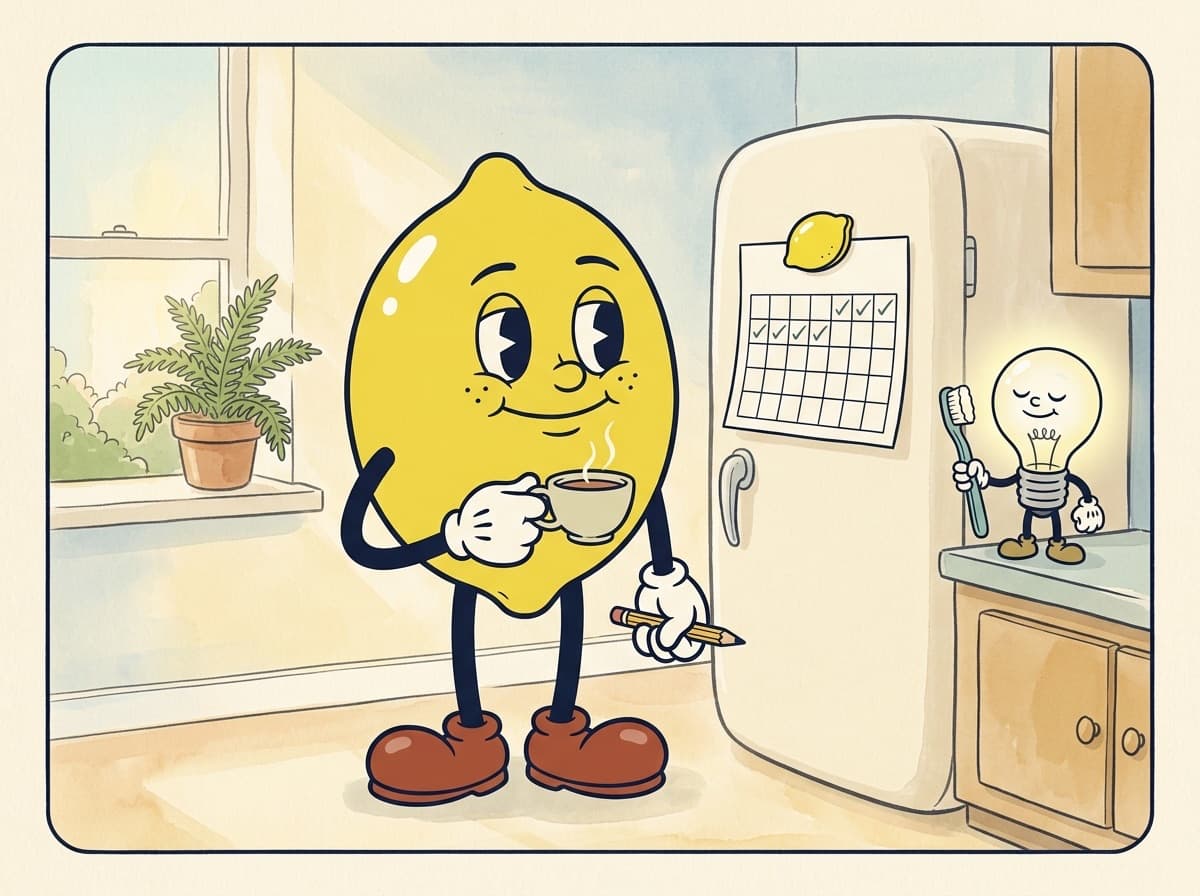
The site went live in January 2026. Now the room has somewhere to go after the talk, and somewhere to come back to. Anyone can read it, pick a habit, and print a plan without handing over an email address. The code belongs to the client, and the site kept growing for months after launch.
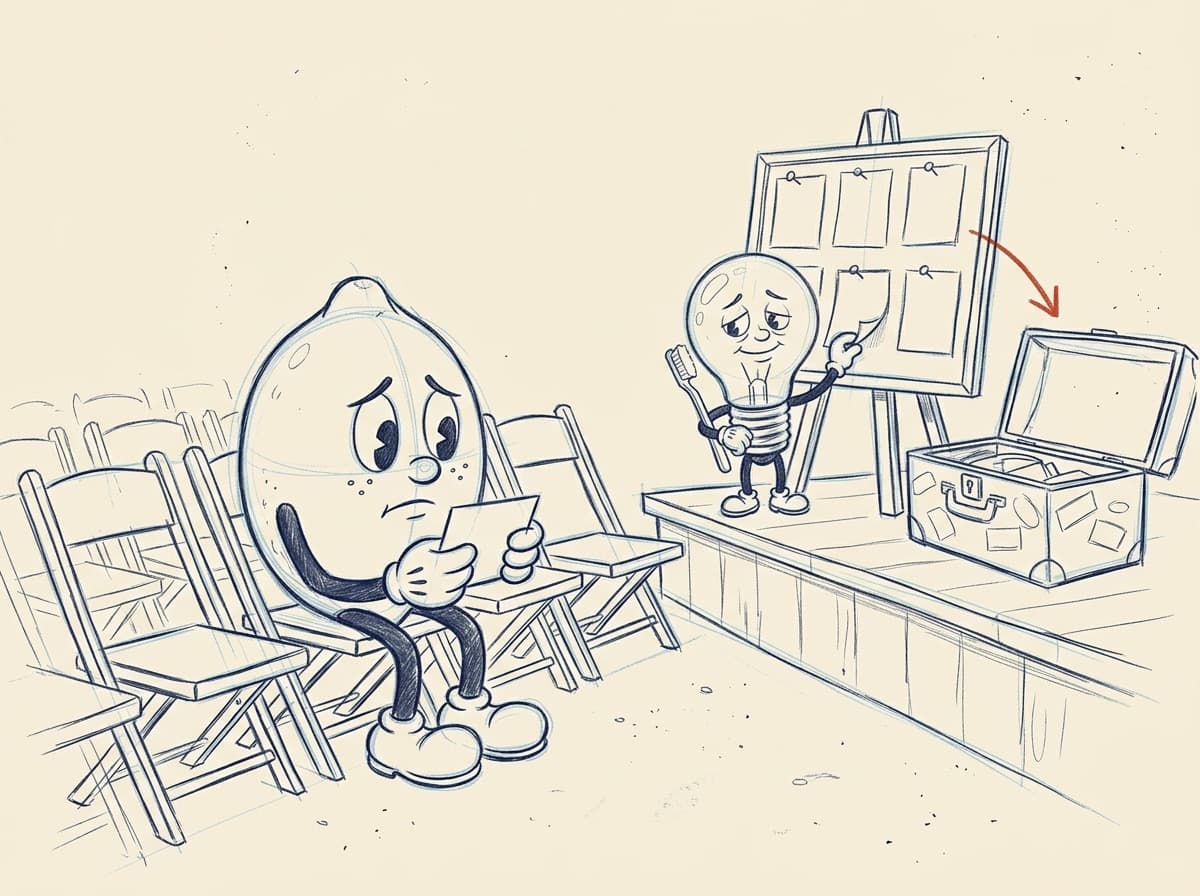
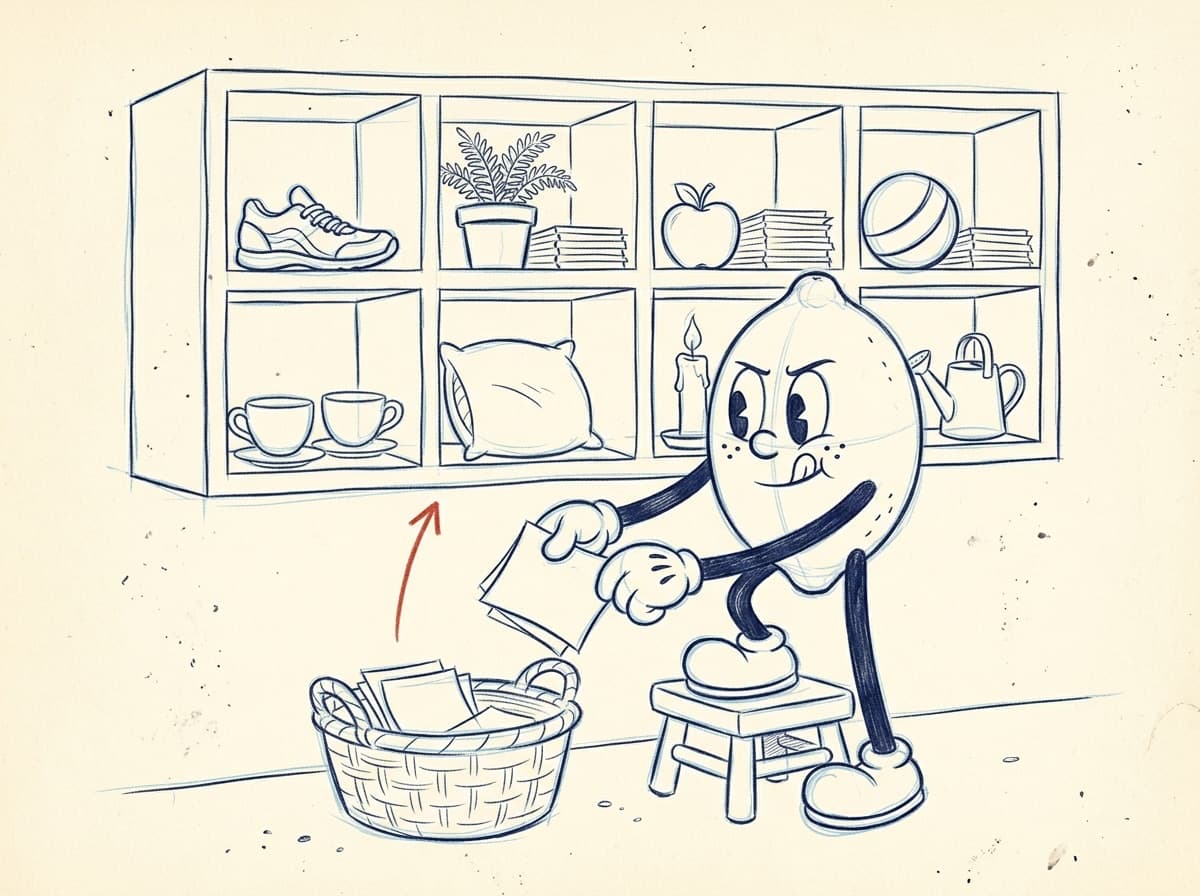
From the storyboard
End credits · The stack
- Site
- Next.js, React, TypeScript
- Interface
- Tailwind and shadcn/ui
- Printable plan
- React PDF, rendered on the server
- Audiences
- Student, adult, and professional views
- Research
- Citations that open to the source
- Newsletter
- beehiiv
- Contact
- Web3Forms with hCaptcha
- Analytics
- PostHog and Vercel Analytics
- Accounts
- None. Preferences stay in the browser
Not if you want something like this.